
Understanding the 8th Pay Commission: What You Need to Know for 2026
Are you a central government employee or a pensioner? If so, you are likely hearing a lot about the 8th pay commission salary increase. It is a hot topic across offices and coffee shops right now. Everyone is wondering how much their take-home pay might change once the new rules are official. Since the government has started the consultation process, now is the perfect time to understand how these updates work.
The 8th Pay Commission is a major event that happens roughly every ten years. It reviews how salaries, pensions, and other benefits are calculated for millions of people. While we are still waiting for final numbers, we can look at the current plans and what experts are saying. Let’s break down the details in a way that is easy to understand, so you know exactly what to look for in the coming months.
What is the 8th Pay Commission?
The 8th Pay Commission is a group of experts set up by the government. Its job is to look at the current pay and pension rules and suggest improvements. Think of it as a “tune-up” for government pay scales. Because the cost of living goes up over time, the government uses this commission to make sure salaries stay fair. They check everything from basic pay to allowances like House Rent Allowance (HRA) and travel perks.
The Role of the Fitment Factor
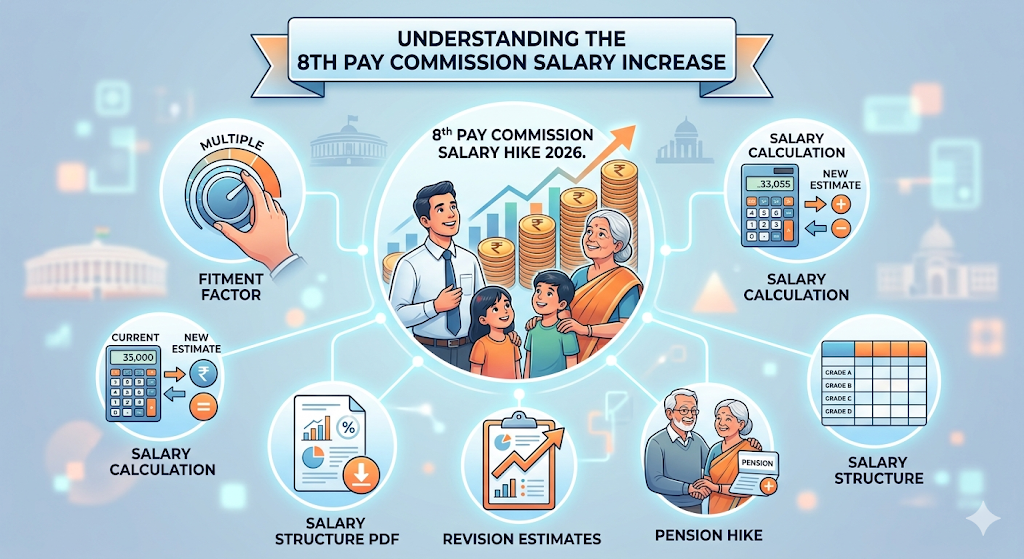
When people talk about the 8th pay commission salary fitment factor, they are talking about a special multiplier. It is a simple tool used to turn your old basic pay into a new, higher amount. For example, if your current basic pay is multiplied by a certain number, that becomes your new base. This is the most important part of the calculation. A higher multiplier means a bigger jump in your monthly salary and your eventual pension.
How the 8th Pay Commission Salary Hike 2026 Works
Many people are asking about the 8th pay commission salary hike 2026. While the government has not given a final percentage yet, there is a lot of talk about what might happen. The goal is to adjust pay so it matches today’s inflation. By looking at trends from past years, many experts expect a solid increase that will help employees handle rising costs. It is not just about the basic pay; it is about keeping your lifestyle comfortable and secure.
Simplifying 8th Pay Commission Salary Calculation
Doing your own 8th pay commission salary calculation might seem tricky, but the basic idea is quite simple. You take your current basic salary and multiply it by the final fitment factor approved by the government. After you get that new basic number, other things like your Dearness Allowance (DA) and HRA are calculated using that new base. This means a change in your basic pay creates a “snowball effect” that increases your total monthly income.
Current Status of Salary Revision Estimates
The 8th pay commission salary revision estimates are currently based on what employee unions and financial experts are suggesting. Since the commission is in its consultation phase, they are traveling to different cities to talk to people. They want to hear from employees about what they need. While these are just estimates, they give us a good idea of what to expect. Most projections suggest a significant bump to help bridge the gap between old pay scales and current market needs.
Why Pensioners are Watching Closely
The 8th pay commission salary pension hike is just as important as the salary increase. For those who have retired, the pension is their primary income. When the basic pay for active employees goes up, the pension amounts usually rise as well. This ensures that retirees also see the benefits of the new commission. It is a vital part of the process, as it helps seniors keep up with the cost of healthcare and daily living expenses.
What is the New 8th Pay Commission Salary Structure?
The 8th pay commission salary structure is essentially the new “grid” or “matrix” that will decide your pay level. In the past, this system helped remove confusion and made sure everyone knew exactly what their salary progression looked like. The new structure will likely keep this clear and easy-to-read format. It will define the minimum and maximum pay for every job grade, making the whole system very transparent for all staff members.
Where to Find the 8th Pay Commission Salary Structure PDF
Once the government officially releases the new rules, they will likely publish an 8th pay commission salary structure pdf. This document will be your best friend. It will contain the master tables that show every pay level and exactly how much the basic pay is for each step. Keep an eye on official government portals, as that is where you will find the most accurate and authorized information once it becomes available to the public.
The Consultation Phase: How You Can Participate
The government is not making these decisions alone. They are holding meetings across the country to gather feedback. If you are an employee or a member of a union, your voice matters. By participating in these consultations, you can help the commission understand the real-world challenges faced by staff. This active engagement is a key part of how the government ensures the final recommendations are fair and helpful for everyone involved.
Looking Ahead: Preparing for the Changes
As we move through 2026, stay patient and keep checking for official updates. Changes like these take time because the government wants to get them right. While it is natural to feel excited about a pay raise, remember that these systems are designed to be stable and long-term. By staying informed and understanding the basic concepts like the fitment factor, you will be well-prepared when the new pay scales are finally implemented.
Frequently Asked Questions (FAQs)
1. When will the 8th Pay Commission recommendations be implemented? The government plans for the new pay scales to be effective from January 1, 2026. Any delay in the final announcement often results in arrears being paid for the waiting period.
2. Is the 8th pay commission fitment factor fixed? No, it is not fixed yet. The final multiplier will be decided by the government after considering the commission’s report and the country’s economic situation.
3. Does the 8th pay commission salary increase apply to everyone? Yes, it is designed to cover central government employees and pensioners. State government employees may have separate rules depending on their specific state policies.
4. How can I calculate my expected new salary? Once the official fitment factor is announced, you can multiply your current basic pay by that factor. Then, add your allowances like DA and HRA based on the new basic salary.
5. Will the new salary structure affect my retirement benefits? Absolutely. Since pensions are calculated based on your final basic pay, an increase in your basic salary under the new commission will lead to a higher pension.
6. Where can I find official updates on the 8th Pay Commission? You should only trust official government websites or verified news sources. Avoid unofficial websites that might share confusing or incorrect math regarding your future salary.


